

Alone But Not Lonely? Why Solitude Feels Like Misery and How to Reframe It
You’ve finally closed the door. The world is quiet. You have a few precious hours to yourself, a moment you might have even craved. But instead of feeling peace or freedom, a heavy, paralyzing fog rolls in. Your mind whispers, “What’s the point?” The motivation to read, create, or even tidy up evaporates. You scroll mindlessly, hating yourself for it, feeling like a “pathetic blob” adrift in a silent, empty space. You’re not just alone; you’re drowning in a specific kind of distress that makes solitude feel like punishment.
If this resonates, please know this first: you are not broken, weak, or failing at being a person. The common advice to “just enjoy your own company” isn’t just unhelpful—it can feel like a cruel joke when your brain and body are screaming in protest the moment external stimulation stops. This article is for anyone who feels a spike of anxiety looking at an empty park bench, who feels a profound void when left with their own thoughts, or who, like one person shared, feels like a “whore under fire” needing constant external validation to feel real.
We’ll explore why forced solitude feels so different from chosen solitude, how conditions like depression directly hijack your ability to do things alone, and—most importantly—provide compassionate, actionable “scaffolding” to help you rebuild a relationship with your own presence, one small step at a time.

The Crucial Divide: Chosen Solitude vs. Forced Isolation
The first step in untangling this misery is to recognize there are two fundamentally different experiences masquerading under the same word: “alone.”
Chosen Solitude is a restorative retreat. It’s the quiet coffee after everyone has left, the intentional walk to clear your head, the deep dive into a hobby. It’s powered by a sense of agency and safety. Your nervous system is calm. This solitude refills your cup.
Forced Isolation, however, is what you’re likely experiencing. It’s not chosen; it’s what happens when others aren’t there. It’s the empty hours that stretch out because you have no plans, the silence that amplifies inner criticism, the walk you avoid because, as one person described, you fear “disturbing the place” or feel a creeping dread in open spaces. This isolation triggers a threat response. It feels less like a retreat and more like an exile.
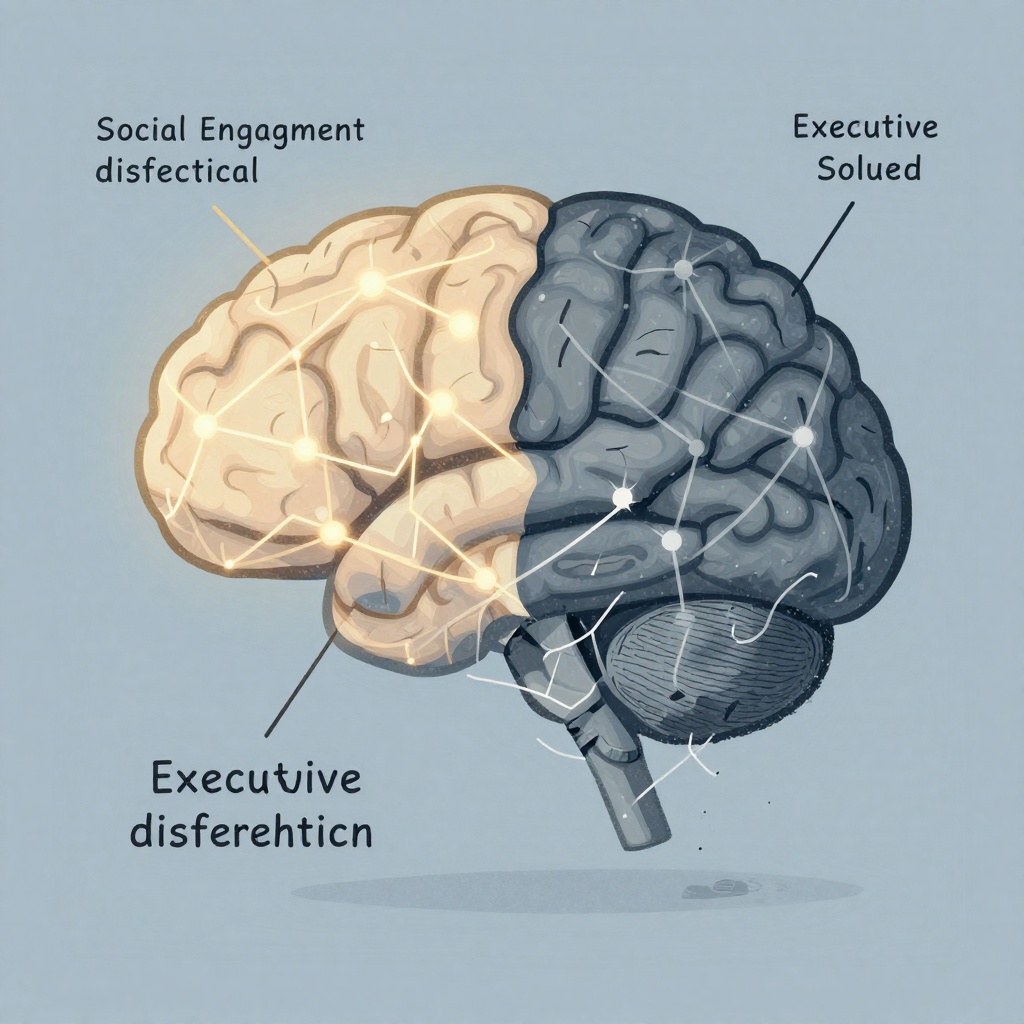
Why does this happen? For many, especially those dealing with depression, anxiety, or ADHD, the absence of external structure or social cues creates a vacuum. Your brain, already struggling with executive function (the mental skills needed to plan, focus, and initiate tasks), is left without a roadmap. The internal monologue shifts from “What would I like to do?” to “I should do something… but nothing feels worthwhile. What’s the point?” This is the neurological hijacking at play.
Why Your Brain Turns Solitude Into a Vacuum
When you read posts from people saying, “I lose all desire to do anything when I’m left to myself” or “My brain doesn’t work like normal peoples’… baseline adult behavior is tremendously tiring,” you are hearing direct reports from a brain under duress.
- Depression and Executive Dysfunction: Depression isn’t just sadness. It’s often a profound disruption in motivation and initiation. The brain systems responsible for saying, “Let’s start that task,” and feeling reward upon completion are offline. Alone time, devoid of external prompts, becomes a stark landscape where this dysfunction is most visible. There’s no one to hand you the first piece of the puzzle.
- Anxiety and Hyper-Vigilance: For those who feel dread in open spaces or a need to constantly look over their shoulder, solitude isn’t peaceful—it’s unsafe. The brain is in a state of hyper-vigilance, scanning for threat. This consumes immense energy, leaving none for productive or enjoyable activity. You’re not relaxing; you’re standing guard.
- The Validation Void: Humans are social creatures wired for connection and co-regulation (calming our nervous systems through the presence of others). When you feel, as another person shared, a desperate need for your ideas to be “highly valued” by others, being alone cuts off that supply of external validation. Without it, your sense of self can feel shaky or disappear altogether, making any solo action feel meaningless.
The goal isn’t to suddenly love being alone. It’s to build a bridge from paralyzing isolation toward manageable, and eventually perhaps even peaceful, solitude.
Building Scaffolding: Practical Techniques for Alone Time
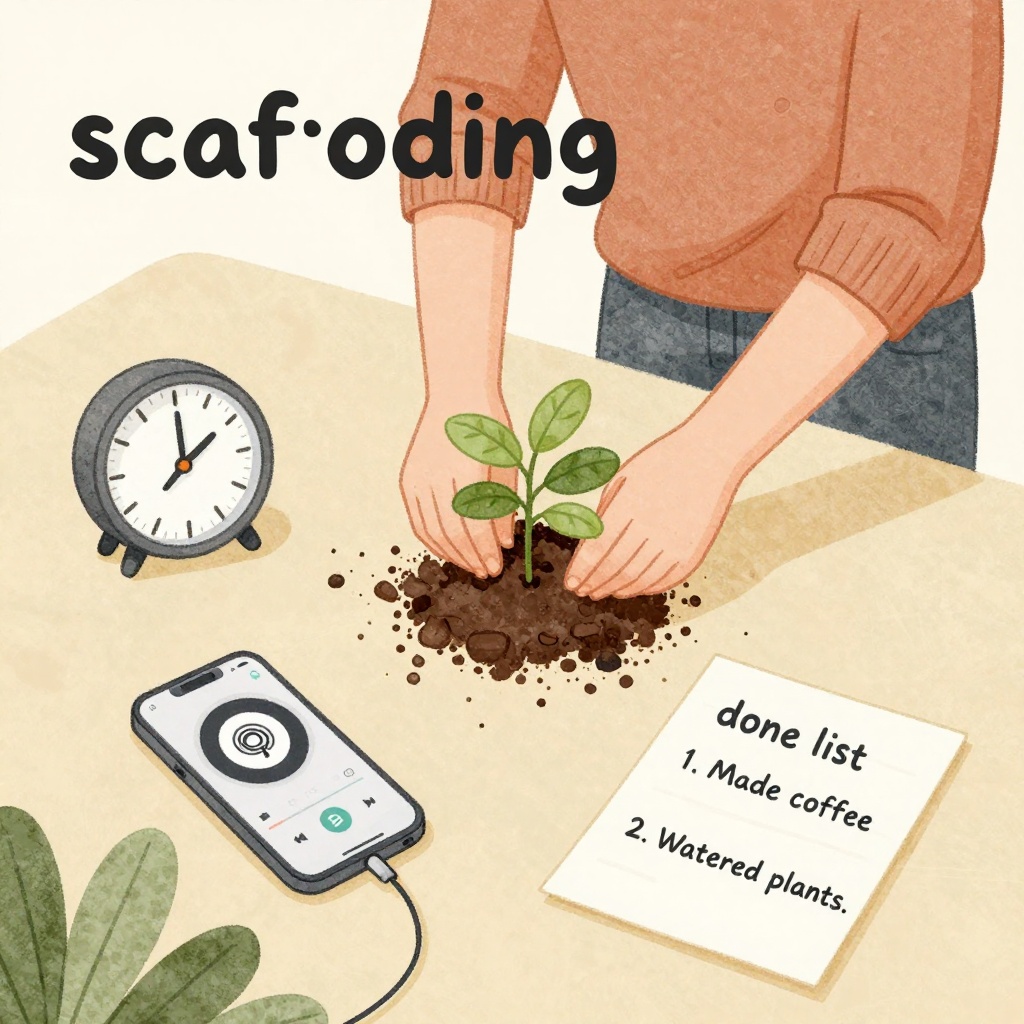
You cannot will your brain into functioning differently. But you can build external structures—scaffolding—to support it while it heals or manages its patterns. Think of these not as permanent crutches, but as training wheels for your solo time.
Start With “Parallel Presence”
Jumping straight into total silence and isolation is too big a leap. First, borrow a sense of companionship.
- Virtual Co-Working & Body Doubling: Use platforms like Focusmate or simply a video call with a friend on mute. The simple, accountable presence of another person working can trick your brain into “work mode.” There are countless live “study with me” or “work with me” streams on YouTube that offer this for free, any time of day.
- Auditory Scaffolding: Fill the silence with the hum of low-demand human presence. Listen to podcasts or audiobooks (non-distracting ones). The voices create a sense of shared experience. Try a podcast about a hobby while you sort laundry—you’re learning and being kept company simultaneously.
- Curate Your Digital Space: Follow social media accounts that share quiet, mundane moments of solo life without the gloss. Normalize simply being alone, not necessarily thriving alone.
Create Time-Bound, Low-Barrier Activities
The enemy is the formless, endless stretch of time. Defeat it with micro-commitments.
- The 20-Minute Pact: Set a timer for 20 minutes. Your task is not to “clean the kitchen.” It is to “put on a specific album and only unload the dishwasher while it plays.” Or “listen to this one podcast episode while I organize this one drawer.” The activity has a clear start, a built-in end (the timer or the episode), and is absurdly specific to bypass decision fatigue.
- Solo Outing with a Script: If being outside alone is triggering, give yourself a tiny mission. “I will walk to the coffee shop, order one tea, and sit for 10 minutes while I people-watch.” Or “I will go to the park and take five photos of different green things.” The scripted purpose reduces the anxiety of the vast, open “what should I do now?”
- The “Done List”: At the end of a solitary period, write down everything you did, no matter how small. “Made tea.” “Stood by the window for 2 minutes.” “Sorted socks.” This combats the brain’s depressive filter that screams “You did NOTHING!” by providing tangible evidence to the contrary.
Reframe the Relationship with Your Thoughts
The silence becomes frightening when your inner narrative is hostile. You don’t need to force positivity; you need to introduce neutrality.
- Externalize the Voice: When the thought “You’re pathetic for being here alone” arises, literally write it down. Then, write a response as if you were comforting a friend. “It’s understandable to feel this way. Many people struggle with this. Let’s just try one small thing.”
- Practice Descriptive Self-Talk: Narrate your actions quietly, like a nature documentary. “Now she is opening the cabinet. She is taking out the mug. The mug is blue.” This simple technique grounds you in the present and distances you from the critical monologue.
Moving From Endurance to Engagement
The ultimate goal isn’t just to survive alone time, but to slowly, gently, discover moments within it that feel authentically yours. This is a slow recalibration.
- Follow Micro-Curiosities: Don’t pressure yourself to find a “passion.” What is a tiny question you have? “What does that bird outside my window actually look like up close?” (Google it). “What would happen if I tried to sketch this coffee cup?” The goal is the moment of curiosity, not a masterpiece.
- Connect with Your Physicality: Depression and anxiety live in the head. Gently move to the body. Do five stretches. Feel the texture of a blanket. Savor the temperature of a shower. This is a way to be with yourself that isn’t about thinking.
- Acknowledge the Systemic: Part of the heavy feeling, as one person poignantly wrote, is living in “a society that feels fake and hypocritical.” Your struggle with solitude isn’t only personal; it’s also a reaction to a world that often prioritizes hyper-connection and productivity over quiet being. Giving yourself permission to just be is a subtle act of rebellion.
You are not crazy for finding this hard. You are a complex human navigating a world that often makes it difficult to hear our own voices above the noise. The path forward is not about achieving perfect, joyful solitude. It is about replacing the paralyzing void with small, manageable structures. It is about changing the question from “Why can’t I enjoy being alone?” to “What is the smallest, kindest thing I can do with myself for the next 20 minutes?”
Start there. Be painfully specific. Borrow presence. Celebrate microscopic wins. Your relationship with your own company is just that—a relationship. And like any relationship, it can be repaired with patience, compassion, and very small steps.