

Building a Future You Don’t Fear: Moving From Post-2020 Melancholy to Purpose
Do you ever find yourself scrolling, staring into the middle distance, and feeling a deep, hollow ache for a time that’s gone? You’re not alone. Comments like, “I cannot stop obsessing about it and getting kind of depressed every day realizing that it’ll never be how it was,” or the feeling that “something broke after that,” are echoing across kitchen tables and quiet screens everywhere. This isn’t just a bad mood; it’s a specific kind of grief for a lost world and a lost sense of self. The future, once a canvas of possibility, can now feel like a bleak, uninviting path.
If you’re reading this, you might be carrying that weight. You might have a son who has retreated from the world, or you might feel a simmering frustration when faced with simplistic answers to your complex pain. This article is for you. We’re not here to peddle easy answers or toxic positivity. Instead, we’ll walk through a compassionate, practical framework for constructing a sense of purpose and safety from the ground up—not by returning to a past that’s gone, but by building a future you don’t have to fear.

Acknowledging the Global Shift: Your Feelings Are Valid
The first, most crucial step is to stop blaming yourself for feeling this way. What we’ve collectively lived through isn’t a minor blip; it’s a fundamental shift. We endured a global pandemic, a profound disruption to our social fabric, economic instability, and a constant stream of global crises. This isn’t just “stress”—it’s collective trauma. Trauma, by definition, shatters our assumptions about the world being safe, predictable, and just.
When someone says, “Life after 2020 just feel so horrible,” they are accurately describing a psychological reality. The old maps we used to navigate life—career paths, social norms, plans—no longer match the territory. Nostalgia for the pre-2020 world isn’t a weakness; it’s a natural longing for a time when our maps felt reliable.
Actionable Takeaway: Name and Normalize.
* Practice: Say this out loud or write it down: “My sense of unease and fear about the future is a normal response to abnormal times. I am not broken for feeling this way.”
* Why it works: This moves the feeling from a personal failing (“What’s wrong with me?”) to a shared human experience. It reduces shame, which is often the biggest barrier to healing.
Redefining “Optimism”: From Blind Faith to Hopeful Realism
The brand of “optimism” sold to us pre-2020 often felt like a demand: “Just think positive! Everything happens for a reason!” For many, especially those in deep pain, this feels insulting. As one Reddit user vented about unsolicited advice: “Those suffering do not need you to peddle your beliefs onto them…” That old optimism can feel like a denial of reality.
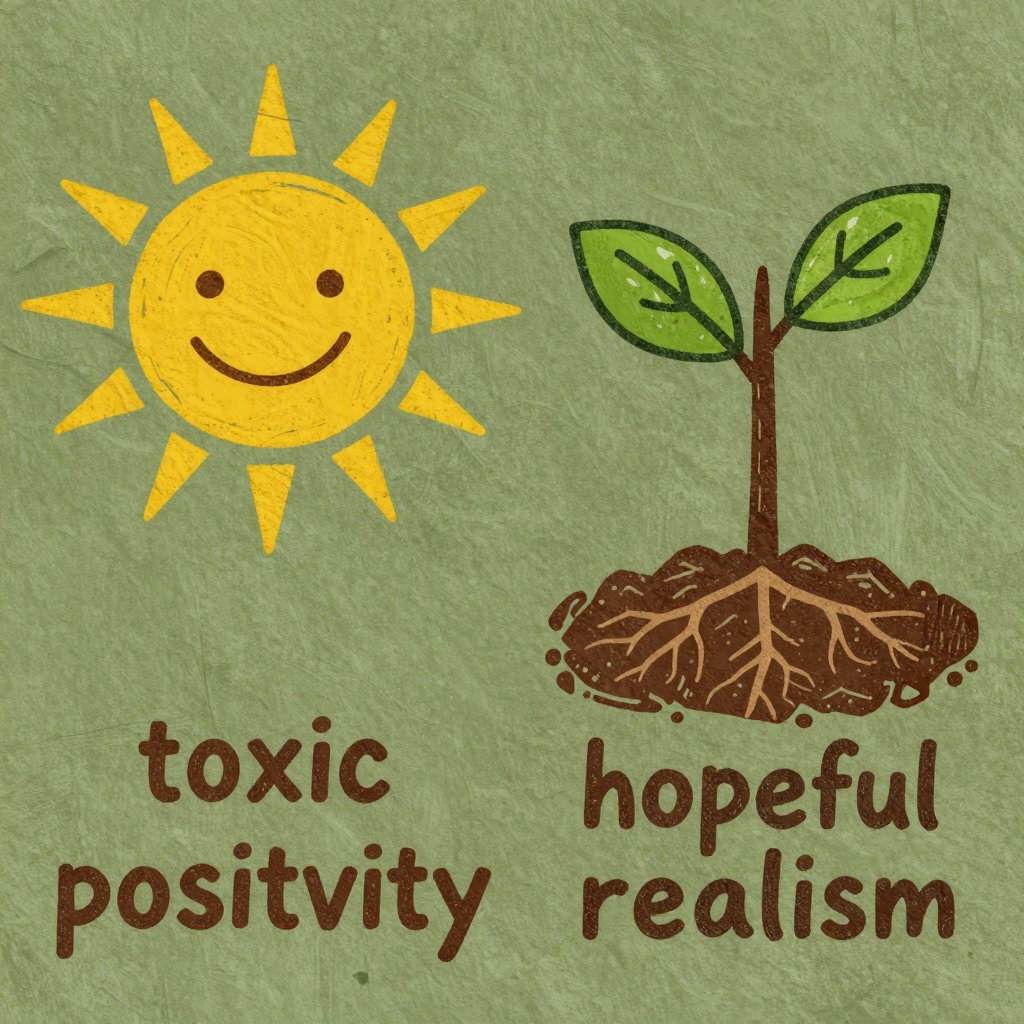
What we need now is not blind faith, but Hopeful Realism.
Hopeful Realism has two core components:
1. Clear-Eyed Acceptance: It acknowledges the current difficulties without sugarcoating. Yes, things are hard. Yes, the world has problems. This is the “realism.”
2. Agency-Focused Hope: It believes that while we may not control the world, we can influence our small corner of it. Our actions, however tiny, matter. This is the “hope.”
It’s the difference between “Everything will be fine!” (which feels empty) and “This is really hard, and I have the capacity to take one small step to care for myself and my values today.”
Building Your Foundation: The Power of Micro-Aspirations
When the future is terrifying, a traditional “5-year plan” can feel laughable or paralyzing. For the young adult who can’t leave their room or the parent watching them struggle, big goals are the enemy. The pressure to “figure it all out” leads to shutdown.
The antidote is Micro-Aspirations. These are tiny, almost laughably simple goals that have nothing to do with changing the world and everything to do with rebuilding your sense of agency.
A micro-aspiration is not “Get a job.” It’s:
* “Update one line on my resume today.”
* “Walk to the mailbox and back.”
* “Make my bed this morning.”
* “Cook one simple meal instead of ordering.”
Why This Works:
* Competence: Each completed micro-aspiration is a tiny vote of confidence for your brain: “I can do things.”
* Momentum: Small wins create a neurological ripple effect, making the next slightly harder task feel more possible.
* Reduced Overwhelm: It bypasses the panic of the “big picture.”
Actionable Takeaway: The 2-Minute Rule.
* Practice: Identify one thing you’ve been avoiding. Ask: “What is the absolute smallest, 2-minute first step I could take?” Do only that. Completing a 2-minute task (e.g., filling a glass of water for the plant, opening the job search website) is a victory.
Curating Your Inputs: Reclaiming Your Mental Space
Our sense of the world is shaped by what we feed our brains. A diet of 24/7 news cycles and algorithmic social media feeds designed to provoke outrage and fear will naturally lead to a sense that the world is “broken.” We absorb a narrative of collapse.
To build a personal future, you must consciously curate a personal narrative. This isn’t about ignoring reality; it’s about balancing the scales.
A Practical Media Diet:
1. Designate Times: Consume news intentionally, not impulsively. Maybe once in the morning for 20 minutes from a reputable source—not right before bed.
2. Prune Your Feeds: Unfollow accounts that consistently leave you feeling anxious, envious, or hopeless. Mute keywords that trigger existential dread.
3. Seek Constructive Inputs: Actively follow accounts, podcasts, or newsletters that focus on solutions, community care, science, art, or skill-building. Fill the space you created.
Think of the parent worried about their son. Their input might be fear-based articles about “failed launches.” A curated input could be a podcast on gentle parenting for adult children or a subreddit for parents offering non-judgmental support.
Weaving a New Narrative: From Passive Observer to Active Author
When we feel powerless, we see ourselves as characters in a dystopian story someone else is writing. The final step is to pick up the pen.
This means actively looking for evidence that contradicts the “everything is broken” story and connecting to meaning on a human scale.
Exercises to Author Your Story:
* The Daily Glimmer Journal: Each evening, write down one small thing that was okay, mildly pleasant, or showed a hint of humanity. A stranger’s smile, the taste of your coffee, a moment of quiet. This trains your brain to scan for data points of safety and connection.
* The “And Yet” Practice: When you have a thought like, “The world is falling apart, and yet… today I helped my neighbor carry groceries.” The “and yet” doesn’t erase the difficulty; it insists on complexity and your own capacity for good within it.
* Find Your Micro-Community: Purpose is often found in proximity. It could be a regular check-in with one friend, a volunteer shift at an animal shelter, or contributing to a local mutual aid fund. It’s about seeing your direct impact.
For the person missing their old life, this isn’t about forgetting the past. It’s about acknowledging: “That chapter was beautiful. And this chapter, though different and harder, is where I am. What is one sentence I can write in it today?”

Conclusion: The Future is Built in the Present
Building a future you don’t fear isn’t about a sudden, dramatic transformation. It’s the quiet, daily practice of hopeful realism. It’s setting a micro-aspiration when you feel frozen. It’s closing the news app to call a friend. It’s allowing yourself to grieve what was while gently insisting that your life still holds meaning.
You are not powerless. Your actions, however small, are the bricks with which you construct a sense of safety and purpose. Start with one brick. Then another. The path forward may look different than you once imagined, but it can be a path you walk with resilience, agency, and a hope that is earned, not just wished for.
Your Call to Action: Today, choose one practice from this article. Just one. Practice naming your feelings, set one 2-minute micro-aspiration, or prune one negative input from your feed. This is how you begin. This is how you build.