
Is It Too Late? Combating the “I’m Too Old to Start Over” Narrative
It’s a quiet, persistent whisper in the back of your mind, growing louder on Sunday nights or when you scroll through a social media feed. It’s too late. You’re too old. You missed your chance. Maybe it sounds like, “I’m 37 and stuck in a career I never wanted,” or “I’m 31 and feel like I’ve already failed.” Perhaps it’s the bone-deep weariness of someone who feels “so far behind in life” that they wonder if there’s any point, or the profound ache of someone who simply misses how things used to be, convinced that “it’ll never be how it was.”
This feeling—that your life path is permanently set, that your best chapters are behind you, and that starting over is a luxury for the young—is one of the most common and paralyzing forms of hopelessness. It’s a narrative that tells you your story is already written. But what if that narrative is wrong? What if the very experiences that make you feel “behind” are the hidden foundation for what comes next?
This article is for anyone who feels trapped by their age, their past choices, or a timeline that seems to have left them behind. We’ll deconstruct the myths holding you back, unearth the valuable skills you already possess, and map out practical, low-risk ways to explore a new direction. Your past is not a prison sentence; it can be your most unique qualification.

The Tyranny of the Timeline: Deconstructing “Being Behind”
We are culturally conditioned to believe in a linear life progression: graduate at 22, climb a career ladder by 30, settle down, and achieve a set of milestones on schedule. This imaginary timeline is a powerful source of what psychologists call “social clock anxiety.” When we feel out of sync with it, we don’t just feel delayed—we feel defective.
The real users’ experiences capture this perfectly:
* “I see people I went to school with having careers, families… I don’t even want some of those things, but it still makes me jealous because these people have actually done something.” This is the pain of comparison, where another person’s path becomes the measuring stick for your own worth.
* “Life after 2020 just feel so horrible… I can’t stop thinking about how nostalgic the past is.” This is the grief for a lost timeline, a previous version of life that feels irretrievably gone, making the present seem like a deviation from the “correct” path.
Actionable Takeaway: Challenge the “Shoulds”
The first step is to interrogate that internal timeline. Where did these “shoulds” come from? Family expectations? Societal messages? Peers? Write them down. Then, consciously reframe them.
* Instead of: “I should be a manager by now.”
* Try: “My path has included periods of survival, learning, and caregiving that taught me resilience and patience—qualities many managers lack.”
* Instead of: “I should have my life figured out.”
* Try: “Life isn’t a puzzle to be solved, but an experience to be lived. My ‘figuring out’ is ongoing, and that’s okay.”
Linear progression is a myth. Nature itself doesn’t work in straight lines—think of roots branching, rivers winding, seasons cycling. A human life is far more complex, rich, and non-linear.
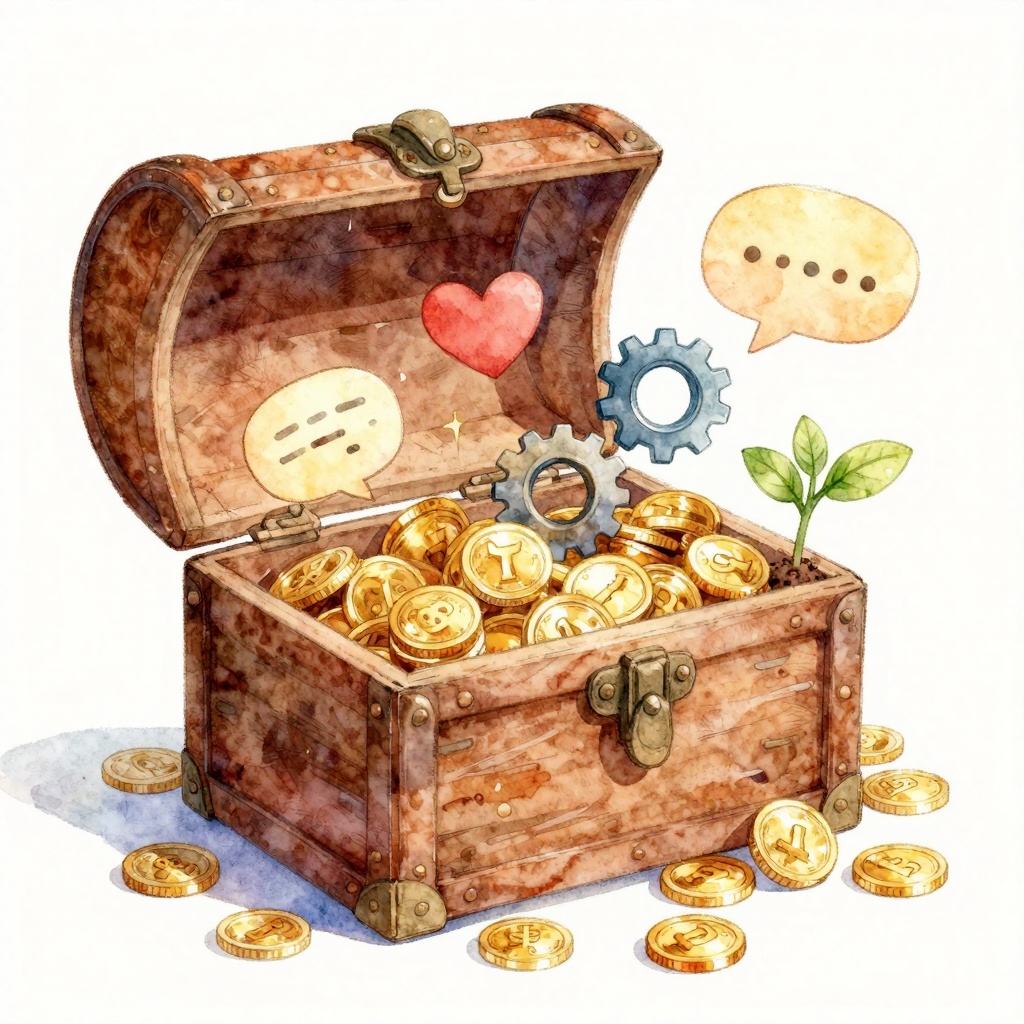
The Hidden Treasure Chest: Auditing Your Transferable Skills
You may look at your resume and see a dead-end job, a gap in employment, or a series of “failures” like dropping out of college multiple times. But within those experiences lies a wealth of transferable skills—abilities that are valuable in any field. The key is to translate them.
Let’s audit your experience through a new lens. Think about any role you’ve ever had—employee, student, caregiver, friend, volunteer.
- From a “Dead-End” Job: Did you handle customer complaints? That’s conflict resolution and communication. Did you organize files or manage inventory? That’s logistics and systems management. Did you show up consistently during a difficult period? That’s reliability and fortitude.
- From Caregiving or Parenting: This is a masterclass in project management, multi-tasking, negotiation, crisis management, and unconditional patience.
- From Surviving Hard Times (as expressed in the user posts): Navigating loneliness, maintaining hope when “everything gets busy” and you feel you have no place, getting through days when you “can’t convince yourself to even leave the house”—these require profound emotional resilience, self-management, and endurance. These are not deficits; they are the skills of a survivor, and they are incredibly strong foundations to build upon.
Exercise: Your Skill Translation Guide
- List Your Roles: Don’t just list job titles. Think “Crisis Calmer,” “Family Logistics Coordinator,” “Project Restarter” (for those college attempts).
- For Each Role, List Tasks: What did you actually do?
- Translate to Universal Skills: For each task, find the core skill. “Listened to a friend in distress” becomes Active Listening and Emotional Support. “Managed household bills on a tight budget” becomes Financial Prioritization and Resource Management.
- Connect to New Fields: How could “Active Listening” be valuable in counseling, human resources, or user experience research? How could “Financial Prioritization” apply to small business, nonprofit work, or project budgeting?
The Exploration Phase: Low-Commitment Ways to Test a New Path
The thought of “starting over” often conjures images of huge, risky leaps: quitting your job, going back to school, investing massive savings. This is terrifying and often unnecessary. The goal is not to jump, but to take a single, curious step.
Here are ways to explore without burning bridges:
- The Informational Interview: Identify someone in a field that intrigues you. Politely ask for 20 minutes of their time for a coffee (virtual or real) to ask about their journey. Most people are happy to share. This isn’t asking for a job; it’s gathering data.
- Micro-Learning: Use free or low-cost platforms like Coursera, Skillshare, or YouTube to take a beginner course in graphic design, coding, personal finance, or creative writing. Dedicate 30 minutes, twice a week. You’re not getting a degree; you’re answering the question, “Does this interest hold my attention?”
- Volunteer or Shadow: Offer your time to a nonprofit or ask to shadow a professional for a day. This gives you hands-on, zero-risk experience in a new environment.
- The “Side Hustle” Test: Can you turn a hobby or interest into a small, low-pressure project? Sell a few crafts online, write a blog post, help a neighbor with gardening. It’s about proving to yourself that you can generate something new.
- Reframe Your Current Job: Can you incorporate a sliver of your new interest into your existing role? If you’re interested in writing, volunteer to draft the team newsletter. If you’re drawn to organizing, propose a new filing system.
This phase is about curiosity, not commitment. It’s about quieting the fear of the unknown by gathering concrete information.

Proof in the Pivot: Stories of Starting Over (After 35, 45, 55)
The narrative that it’s “too late” is shattered by real lives. Consider these archetypes, inspired by countless true stories:
- The 38-Year-Old Teacher to Tech Writer: Sarah felt burnt out in the classroom. She loved explaining complex concepts but was exhausted by the system. She started a blog breaking down tech news in simple terms, leveraging her skill of translating complexity into understanding. Within two years, she was freelancing for software companies. Her “teaching” never stopped; her classroom just changed.
- The 52-Year-Old Accountant to Landscape Designer: Mark spent decades in a corporate cubicle, his only joy being his weekend garden. After an early retirement package, he took a horticulture certificate course. His analytical skills from accounting helped him run a successful, efficient small business designing backyard oases. His life experience became a selling point to clients his own age.
- The 45-Year-Old Retail Manager to Crisis Counselor: Linda had spent years managing a store, de-escalating customer conflicts, and supporting her team through personal struggles. After volunteering at a local hotline, she realized her daily skills in empathy, active listening, and calm under pressure were perfect for counseling. She pursued a part-time master’s degree while working, her maturity and life experience making her a profoundly effective student and later, counselor.
These people didn’t have a magic formula. They had a combination of dissatisfaction, a spark of curiosity, and the courage to take one small step. They didn’t discard their past; they repurposed it.
From “Weary Fantasy” to Grounded Hope: A Path Forward
The most poignant user post speaks of a “deep, weary fantasy of erasure,” not wanting to die, but to stop being a burden and end the exhausting performance. This is the ultimate expression of feeling trapped by one’s own life story. Combating the “too late” narrative is an act of rewriting that story from the inside, moving from a fantasy of escape to the reality of agency.
It begins with the radical acceptance that your worth is not tied to a milestone. It is tied to your presence, your capacity to learn, and your unique accumulation of experiences. The fatigue you feel may not be a sign to give up, but a signal that your current path is draining a soul that is meant for a different journey.
Your First Steps This Week:
- Practice Self-Compassion: Speak to yourself as you would to a friend in this situation. Acknowledge the pain and fear without judgment.
- Conduct the Skill Audit: Spend 20 minutes on the translation exercise. You might be shocked at the wealth you discover.
- Commit to One Micro-Action: Sign up for a free webinar. Watch three YouTube tutorials on a random interest. Draft an email requesting an informational interview. Make it so small that it feels impossible to fail.
It is not too late. It is your time. The years you see as a weight of “being behind” are actually your foundation, your data, your raw material. The path isn’t about going back to the beginning and starting a new race. It’s about realizing you’ve been on a unique journey all along, and the next trailhead is just a few curious steps away.