

“It Won’t Stop”: A Guide to Surviving Days-Long Anxiety Attacks
You’ve tried the breathing exercises. You’ve confided in a friend. You’ve attempted to “think positive.” Yet, the feeling persists—a relentless, humming dread that refuses to lift. It’s not a sharp, 20-minute panic attack that peaks and fades. It’s a constant, exhausting state of being, where you might snatch “5 minutes of bliss” only to be pulled back under by the next wave of fear, rumination, and physical unease. You’re not spiraling for a moment; you feel stuck in the spiral itself.
If this describes your experience, please know this first: you are not broken, and you are not alone. The feeling of a days-long anxiety “attack state” is a terrifyingly common reality, often misunderstood as a series of back-to-back panic attacks. This article is a compassionate, practical guide for navigating that unrelenting storm. We’ll move beyond standard advice to address the unique challenges of prolonged anxiety, using insights from real people who are living through it right now.

Understanding the Storm: Panic Attack vs. Prolonged Anxiety State
To survive this experience, we must first name it correctly. This distinction is crucial because the strategies that help with one may feel useless for the other.
A panic attack is often described as a sudden, intense surge of fear or discomfort that peaks within minutes. It’s a full-body alarm system going off: heart pounding, chest tight, feeling dizzy, trembling, with an overwhelming sense of impending doom or loss of control. As one person shared, it brings the fear of mortality, with physical signs like a spike in blood pressure and tingling, numb hands. The silver lining, if there is one, is its time limit—it typically subsides.
A prolonged anxiety state (or what many call a days-long anxiety attack) is different. Think of it not as a siren, but as a never-ending amber alert on your phone. The intensity may be lower than a full-blown panic peak, but it is constant, waxing and waning over hours or days. It’s characterized by:
- A persistent baseline of dread or “free-floating” anxiety.
- Exhausting rumination—the “spiral that lasts hours to even days” about never getting better.
- Physical symptoms on a low burn: muscle tension, stomach knots, restlessness, fatigue.
- Emotional fragility, where any minor stressor can trigger a sharper spike.
- The cruel trigger of awareness, where “realizing you’re doing fine” suddenly makes you not fine.
This state is what leads to the desperate cry: “It won’t stop.” Understanding this is the first step toward tailored survival strategies.
First Response: Emergency Grounding When Breathing Isn’t Enough
When you’re in the thick of it, being told to “just breathe” can feel insulting. Your nervous system is stuck in “fight-or-flight,” and cognitive techniques can be out of reach. The goal here is not to stop the anxiety immediately (which creates more pressure), but to ground yourself enough to endure it. These are sensory-based techniques designed to bypass a racing mind.
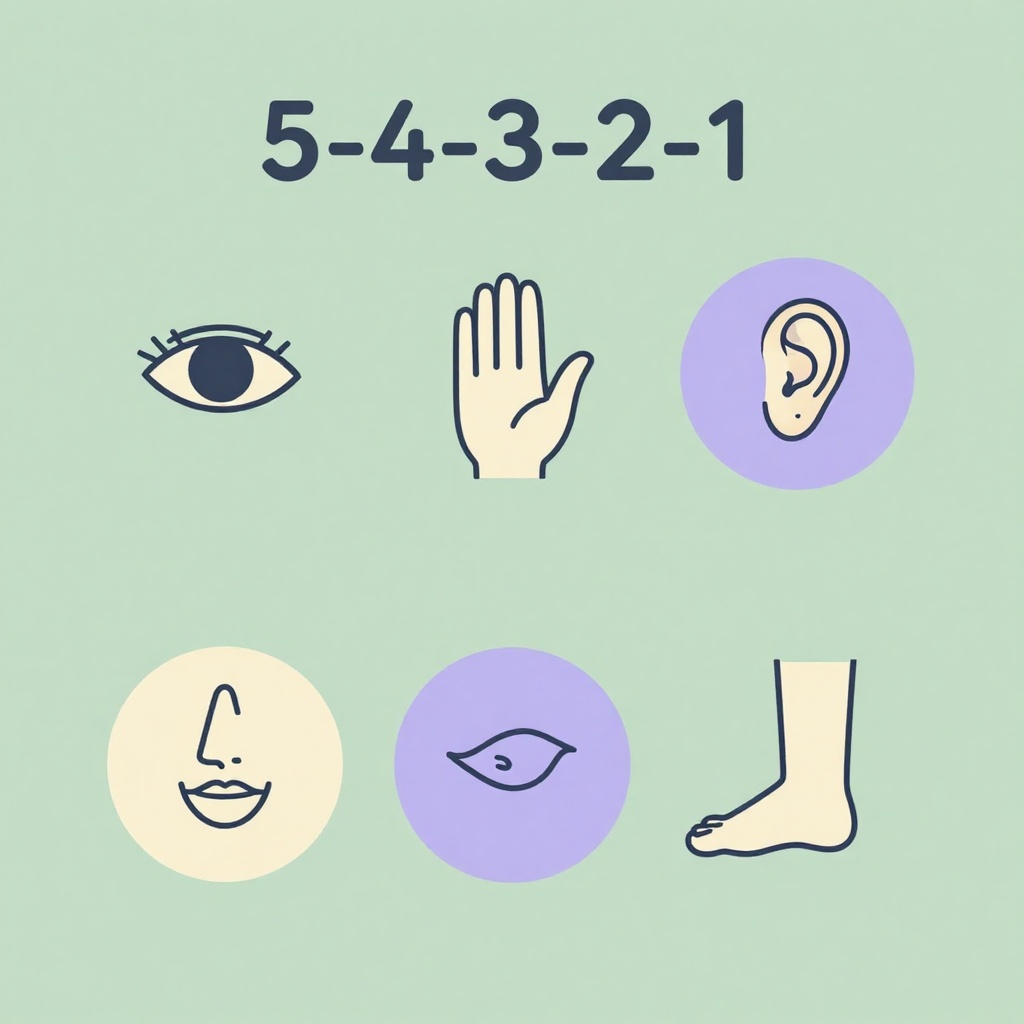
Actionable Takeaway: The 5-4-3-2-1 PLUS Method
Go beyond simply naming senses. Engage them with intention.
- SEE (5): Don’t just look; search. Find 5 distinct textures with your eyes. “The weave of the carpet, the grain of the wood, the matte paint on the wall, the glossy leaf of a plant, the sparkle of a speck of dust in the light.”
- TOUCH (4): Find 4 different temperatures or textures to physically feel. Press your hand against the cool windowpane. Grab a blanket that’s soft. Hold a smooth, cold stone. Feel the rough weave of your jeans.
- LISTEN (3): Identify 3 layers of sound. The obvious (a fan), the subtle (the hum of electricity), and the distant (a car outside).
- SMELL (2): Find 2 scents. Inhale the scent of your sleeve, coffee grounds, a candle, or lotion.
- TASTE (1): Identify 1 taste. Sip a cold drink, bite a mint, or simply notice the taste in your mouth.
The PLUS: Add a movement. Gently press your feet into the floor and notice the pressure. This combines touch with proprioception (your sense of body in space), which is powerfully grounding.
How to Communicate Your Reality to Loved Ones
One of the most isolating parts of this experience is feeling misunderstood. Loved ones, meaning well, may offer “positive vibes only” platitudes that can deepen your sense of failure. You need practical support, not just pep talks. Here’s how to ask for it.
Key Points for the Conversation
- Name the Beast: Start by distinguishing it for them. “This isn’t a quick panic attack. My anxiety has been at a constant, high level for days. It’s like a terrible background noise that won’t turn off.”
- Ask for Specific, Practical Help: People want to help but don’t know how. Give them a menu.
- “I don’t need solutions right now. Could you just sit with me quietly for 20 minutes?”
- “Could you handle making a simple dinner tonight?”
- “Would you be willing to listen without offering advice? I just need to vent.”
- “Can you help me pick a low-energy movie to watch?”
- Explain What Doesn’t Help (Gently): “I know you want me to feel better. Right now, telling me ‘it will be okay’ or ‘just relax’ makes me feel more pressure. What would help more is distraction or practical help.”
- Use the “Panic Hangover” Concept: Explain the aftermath, as one user did. “After a bad spike, I often crash into a hopeless spiral for hours. During that time, I might just need a check-in text or someone to remind me this state is temporary.”
This shifts the dynamic from them feeling helpless to them feeling like an effective part of your support team.
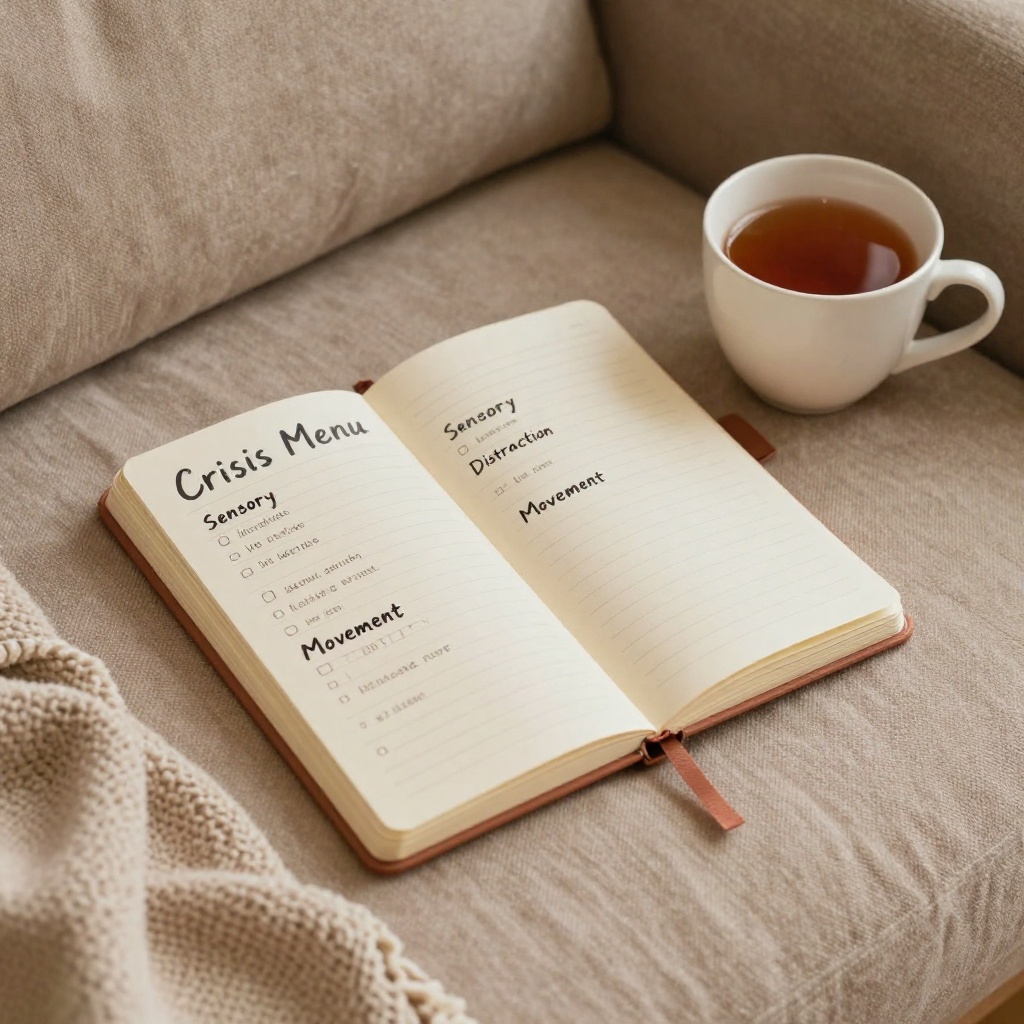
Your “Crisis Menu”: Low-Energy Activities to Ride the Wave
When anxiety is days-long, willpower and motivation are depleted. You need a pre-made list of activities that require near-zero decision-making or energy. This is your Crisis Menu. Print it, save it on your phone, and when the wave hits, you simply pick one thing from the list—no thinking required.
Building Your Menu
Category 1: Sensory Soothing
* Hold an ice cube in your hand and focus on the intense cold.
* Take a lukewarm shower and name the sensations (water on scalp, back, feet).
* Wrap yourself in a weighted blanket or the heaviest comforter you have.
* Savor a single piece of dark chocolate, letting it melt slowly on your tongue.
Category 2: Minimal Cognitive Load
* Audio Only: Listen to a boring audiobook, a familiar podcast, or a “sleep story” app. Let the words wash over you.
* Simple Games: Play a repetitive, pattern-based mobile game (like Tetris or a simple match-3). Research suggests this can interfere with traumatic memory consolidation.
* “Doodling” TV: Watch a visually simple, low-stakes show you’ve seen a hundred times. The predictability is calming.
Category 3: Micro-Movement
* Pace slowly around your room, counting your steps to 10 and starting over.
* Do 5 very slow cat-cow stretches on the floor.
* Simply stand outside your front door for 60 seconds and feel the air on your skin.
Category 4: Externalize the Chaos
* Voice Memo Rant: Open your phone’s voice memo app and rant for 2 minutes. No one will hear it. Get the swirling thoughts out of your head.
* Brain Dump Journal: Write without stopping, grammar, or sense. Just move the words from your mind to the paper until you feel a slight release of pressure.
Navigating the Aftermath and Finding a Path Forward
Surviving the acute state is one thing. Dealing with the exhaustion, shame, and fear of its return—the “panic hangover”—is another. This is where the real healing work begins, once the storm has calmed to a drizzle.
Addressing the “Hangover”
- Practice Self-Compassion: Talk to yourself as you would to a dear friend who just endured this. “That was incredibly hard. You survived it. It makes sense that you feel drained and fragile now.”
- Meet Basic Needs Gently: Don’t jump back into life. Prioritize hydration, the gentlest food you can manage (soup, toast), and rest. Your body has been through a physiological marathon.
- Reflect, Don’t Ruminate: Once you have energy, look at your Crisis Menu. What helped even 1%? What didn’t? Tweak it for next time. This turns a traumatic experience into data, giving you a sense of agency.
Building Longer-Term Resilience
- Professional Support is Key: A days-long anxiety state is a clear signal that your nervous system needs expert help. A therapist can help you understand triggers (like grief and loss, as one user experienced with multiple family deaths) and build new coping frameworks. A doctor can rule out other causes and discuss options.
- Communicate for Accommodations: As the student facing academic appeals knew, documenting this struggle is valid. When ready, work with a therapist or doctor to get the documentation needed to seek accommodations at work or school. Your struggle is real and deserves recognition.
- Redefine “Better”: Recovery isn’t about never feeling anxiety again. It’s about widening the space between trigger and reaction, shortening the duration of these states, and strengthening your life raft of coping skills so you never feel like you’re drowning alone.

You Are Surviving Right Now
If you are in the middle of the “it won’t stop” feeling as you read this, your only task is to get through the next five minutes. Pick one thing from the Crisis Menu. Try one step of the grounding exercise. The goal is not to stop the wave, but to remember you are the surfer, not the water.
This experience is a profound testament to your endurance. It is not a life sentence. By understanding its nature, communicating your needs, and building a practical, compassionate toolkit, you can begin to change your relationship with the storm. The waves may still come, but you will learn to ride them, rest after them, and trust in your own incredible capacity to survive.
Your call to action for today is simple: Bookmark this page. Open your notes app and start your Crisis Menu with just 3 items. In doing so, you take the first, powerful step from feeling powerless to being prepared.